Inverse – a new approach to washbasin systems

Inverse redefines washbasin design by relocating water delivery to the front, improving installation efficiency and spatial use in modern buildings.

Designed Around Reach and Biomechanics

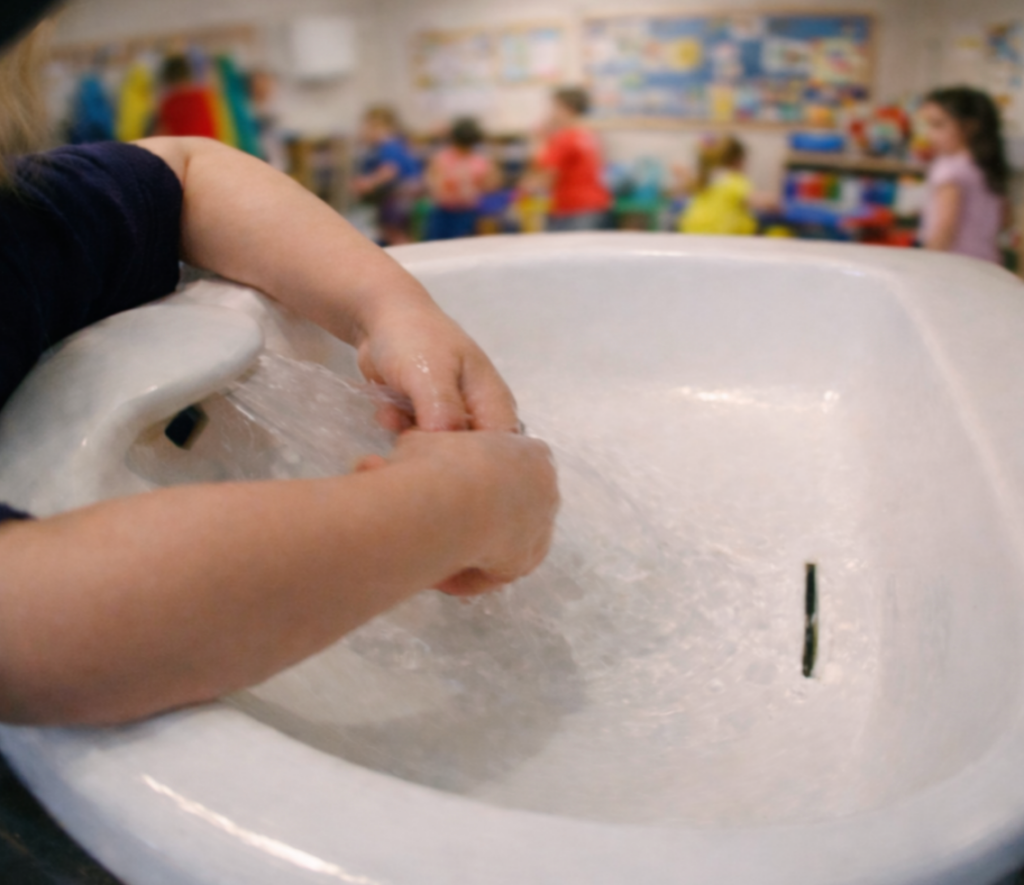
Inverse repositions water delivery to the front edge of the basin, reducing reach distance and the need for forward bending.

For users, this improves ergonomics, hygiene and inclusive use across different ages and abilities.

For building projects, it enables fewer installations and more efficient use of space — reducing both system complexity and required room area.

Early prototype test — Agnes (3) using the basin comfortably without extended forward reach.

Designed For Professional Environments

Inverse is developed for environments where hygiene, accessibility and operational reliability are critical.

Healthcare
Facilities

Healthcare environments require high standards for hygiene, accessibility and controlled operation.

Inverse supports this through forearm access, accessible geometry and directed water flow, supported by integrated safety functions including temperature control and hygiene flushing.

Schools, Pre-schools and Sports Facilities

Educational environments require installations that support shared use, robust operation and user safety.

Inverse enables consistent use across different user heights and reduces exposed components, while integrating safety functions such as temperature control and overflow detection.

Public and Commercial Buildings

Public and commercial environments require installations that minimise maintenance, reduce risk and optimise space utilisation.

Inverse supports this through reduced installation density, minimal exposed components and integrated functions for monitoring and control.

The front-positioned water flow may initially feel different to new users, but is quickly perceived as stable and comfortable in normal use.

Controlled Water Behaviour

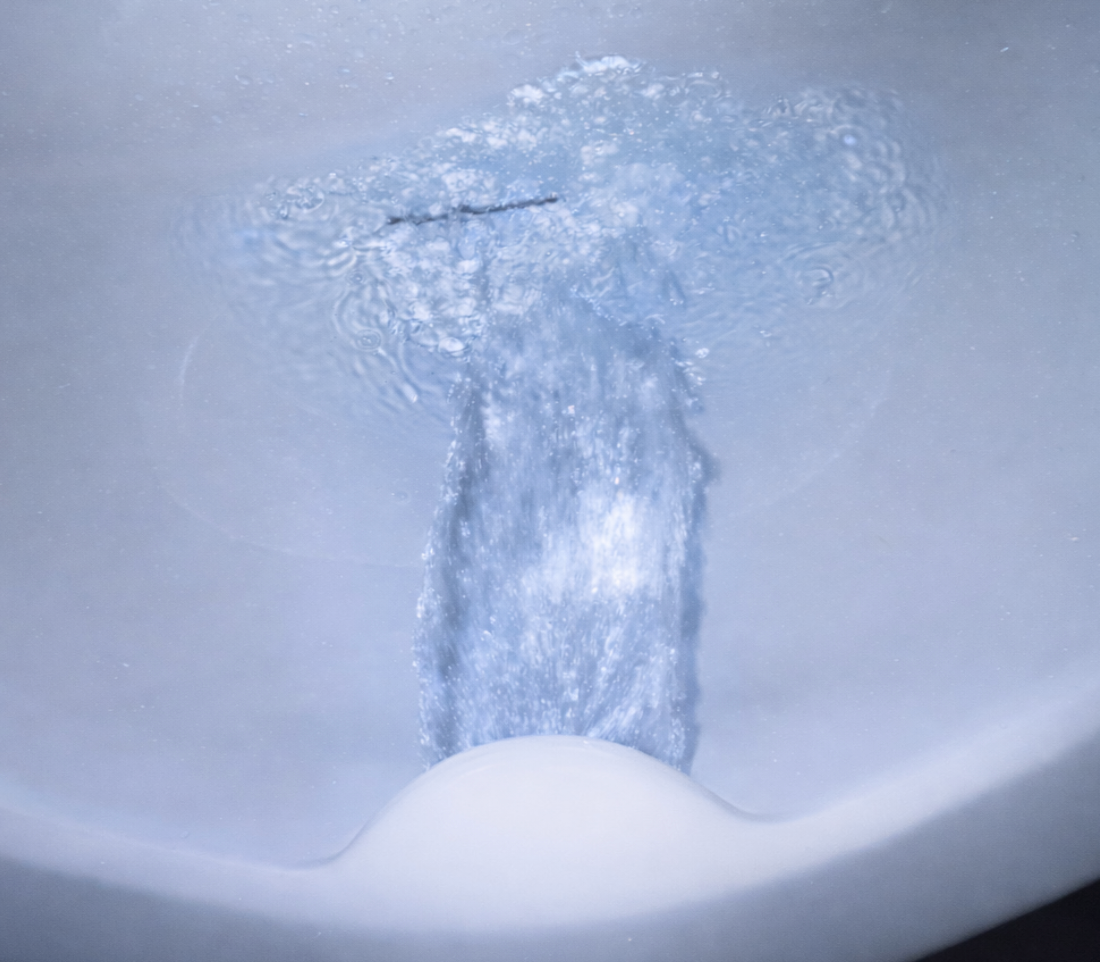
The front-edge inlet directs the water stream away from the user and stabilises the impact zone within the basin.

This flow direction is expected to reduce aerosolisation and support a more hygienic washing environment.

Structural Installation Logic

Inverse separates water delivery from conventional integrated tap constructions.

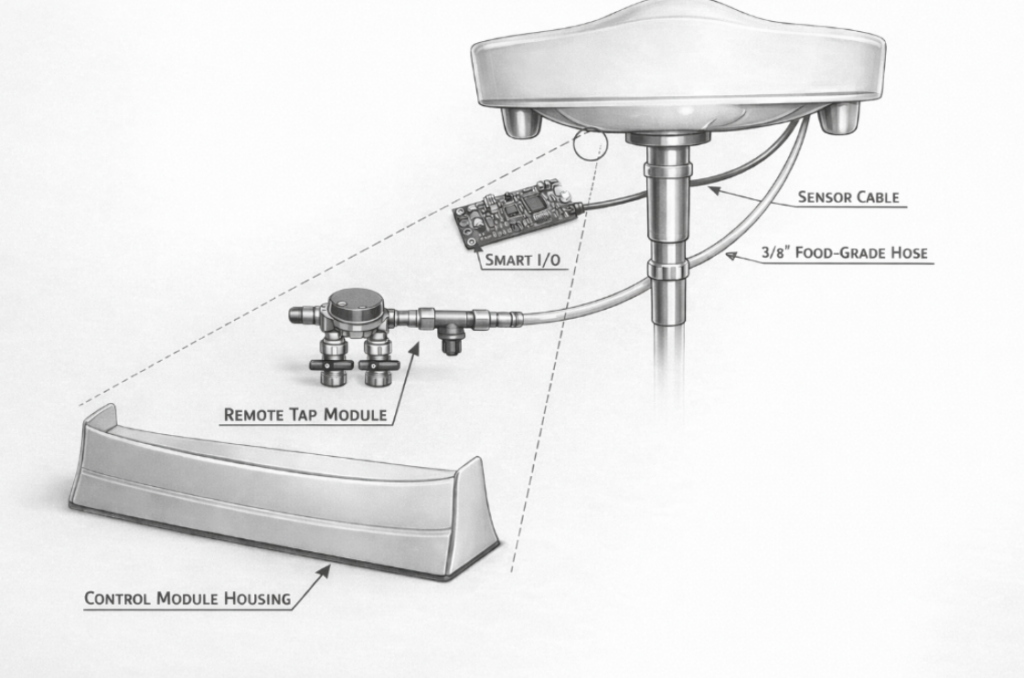
The front water inlet is connected to a remote tap module positioned beneath the basin, where control and activation are handled.

This removes pressurised components from the basin itself, simplifying installation and enabling compatibility with height-adjustable systems.

The separation also allows the drain to be positioned closer to the wall, improving accessibility and under-basin geometry without increasing projection.

By removing pressurised components from the basin, potential leakage points are reduced and system robustness is improved.
System architecture illustrating separation of basin, sensor, remote tap module and control electronics.

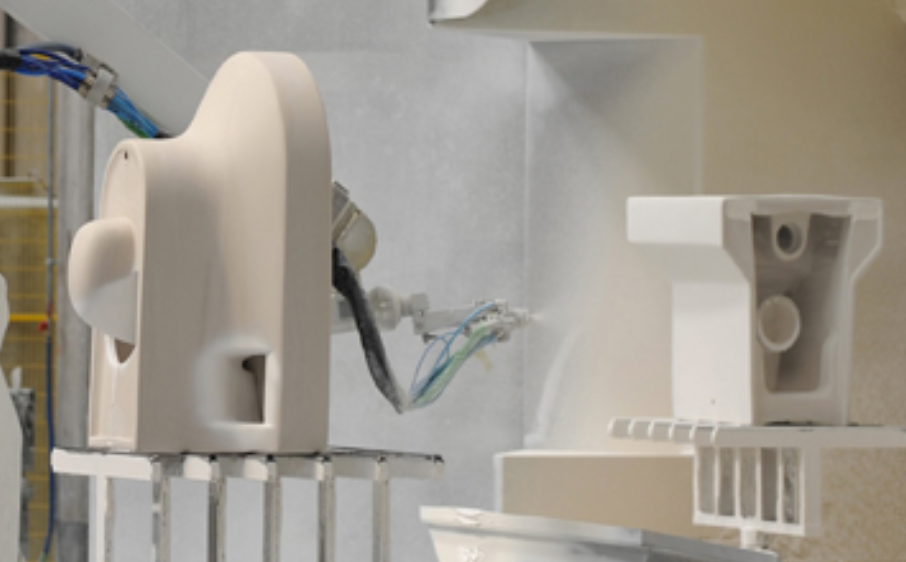
Automated glazing process in ceramic sanitaryware manufacturing.

Material Options

Inverse is available in three material configurations, selected based on project scale, design requirements and lifecycle considerations.

Each option supports different production methods, architectural expressions and durability requirements, while maintaining the same underlying system logic.

Material Option
Manufacturing
Characteristics
Typical Use
Ceramic (Vitreous China)CastingHigh surface hardness, chemically resistant glazed finishLarge-scale, cost-efficient production
Cast Stone (Mineral–Polyester Composite)CastingHigh mass, flexible geometry, durable composite surfaceMedium volumes, institutional environments
Solid Surface (Mineral–Acrylic Composite)ThermoformingSeamless, repairable surface, flexible design expressionProject-specific, lower volumes

Control Architecture

Control Architecture

Control Architecture

Project Integration

Buttler works with architects and project teams to design and optimise handwashing environments for efficient use of space.

We define system configurations for control and operation, and deliver solutions ranging from individual systems to complete project implementations.

Installation, commissioning and ongoing service ensure reliable operation throughout the lifecycle of the installation.

Buttler participates in projects from early design phases through to operation.

Relevant project discussions are welcomed.

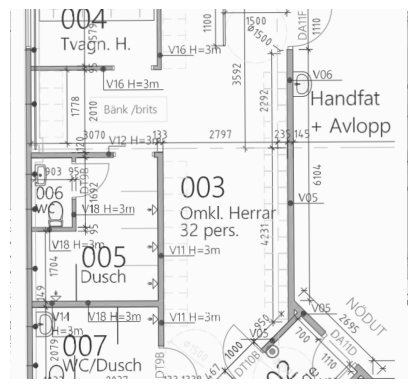
Example of early-stage spatial planning for sanitary installations, illustrating layout, flow and integration of handwashing systems.
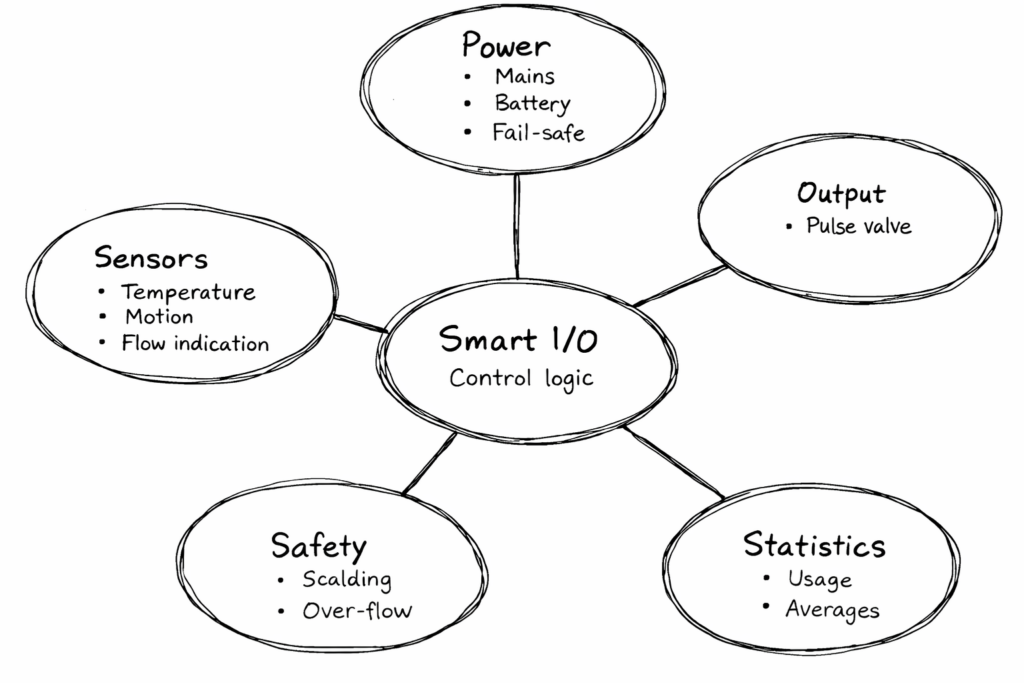
Conceptual overview of the Smart I/O control architecture, integrating power, sensors, safety functions and system outputs.

Control Architecture

Inverse systems are sensor-controlled and operate through a remote tap module with integrated control logic.

The Smart I/O platform connects power supply, sensor inputs and valve control in a modular architecture, enabling controlled activation, safety functions and stable operation.

System monitoring, usage data and integration capabilities are supported through the electronics platform.

Further details on electronics, software architecture and integration are presented under HydroElectronics.